Hard armor plates
Ceramic strike faces for armor vests, produced to standard or customer-defined plate geometry.
Technology
A composite ceramic system based on titanium diboride, produced by low-temperature vacuum sintering. The route yields approximately forty technical ceramic compositions, of which fourteen to sixteen are new-generation armor materials.
Properties & cost
Figures below describe the sintered composite armor material. The governing design target is a grain size below one micron, achieved by controlling both the milling regime and the sintering cycle, and by selecting alloy components that inhibit grain growth.
Values are indicative of the material system. Composition-specific data and applicable test reports are supplied with a formal enquiry.
| Property | Value | Unit |
|---|---|---|
| Process | Liquid-phase and solid-state sintering | — |
| Density | 4.0 – 4.4 | g/cc |
| Microhardness | 3300 – 3600 | kg/mm² |
| Bending strength | 40 – 100 | kg/mm² |
| Grain size, sintered | 0.5 – 0.7 | µm |
| Material cost | $30 – $50 | per kg |
| Application | Ballistic armor | — |
Production route
Liquid-phase and solid-state sintering of titanium diboride-based composite armor powders.
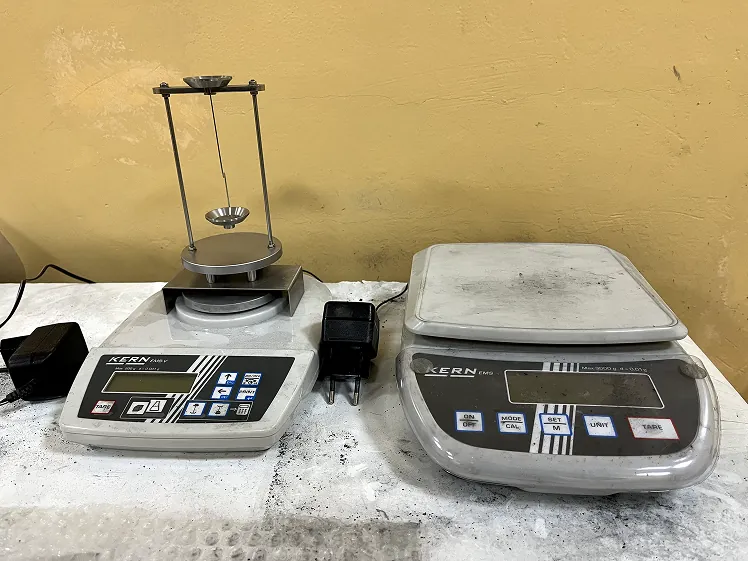
Titanium diboride-based composite armor powders are wet-milled to control particle size distribution.
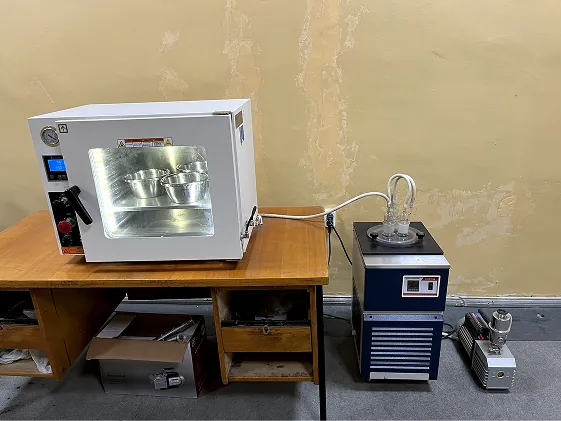
Milled material is dried in a vacuum furnace to remove residual milling fluid before forming.
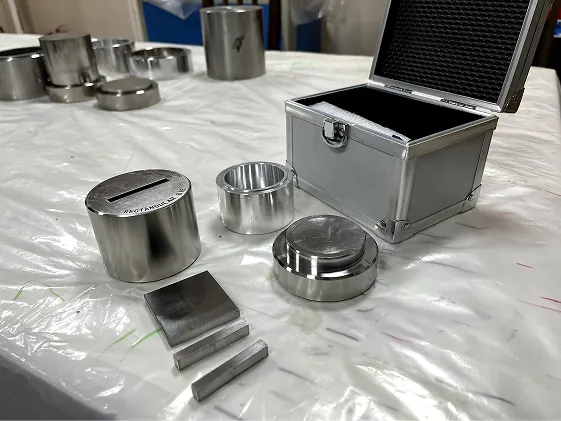
Dried powders are cold-pressed under defined forming regimes to produce green compacts.
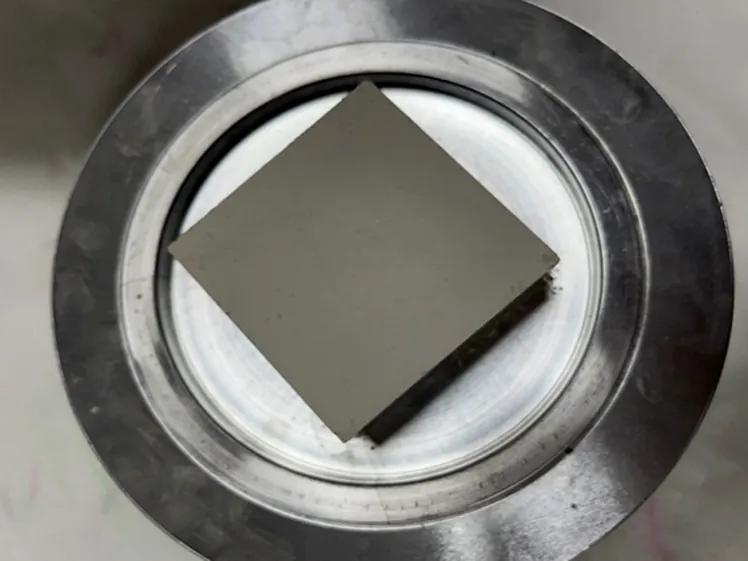
The pressed powder forms a square plate, with geometry set by the press mould.
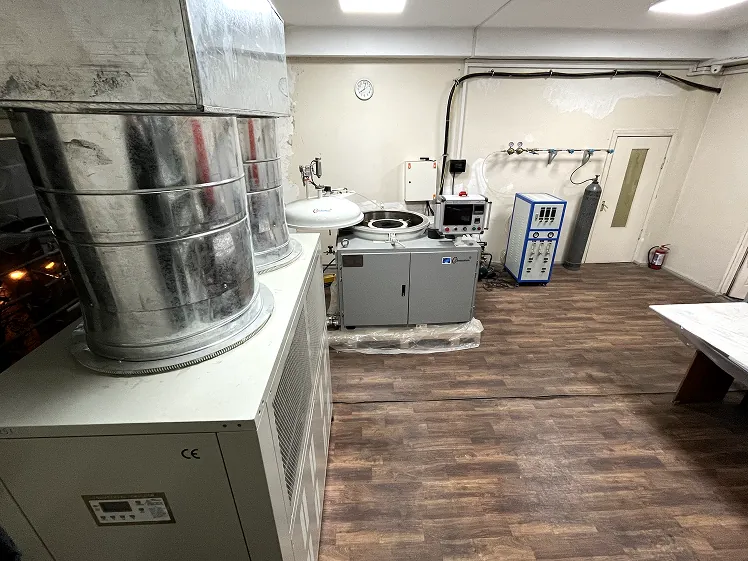
Cold-pressed plates are sintered in a high-temperature vacuum furnace to full density.
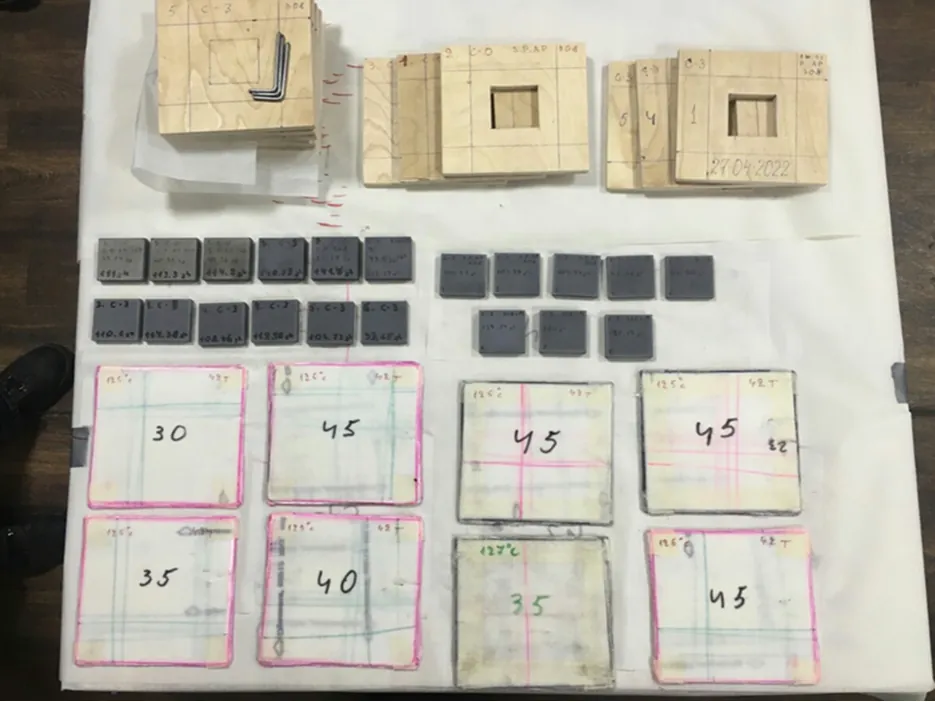
Sintered armor plates are inspected and prepared for ballistic qualification.
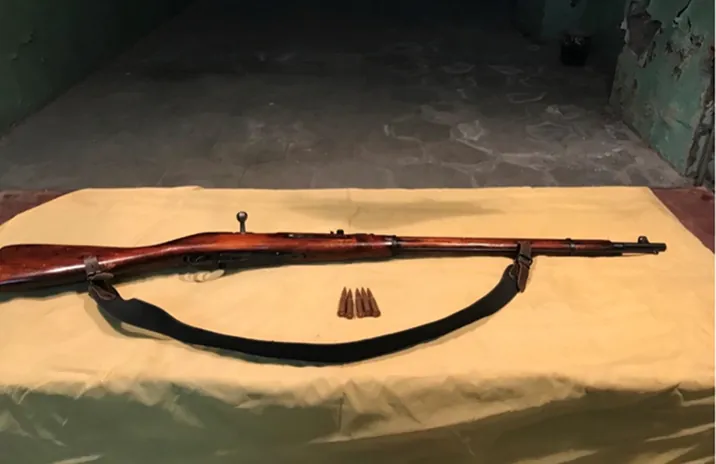
Plates are live-fire tested across three calibres and documented in shooting reports.
Qualification
Sintered plates are ballistically tested across three calibres. Results are recorded in shooting reports and classified against the VPAM protection-level standard.
Test documentation, threat cartridge data and protection-level classification are released to qualified enquiries.
Applications
Ceramic strike faces for armor vests, produced to standard or customer-defined plate geometry.
Ceramic composite elements for head protection where weight and multi-hit capability both govern.
Appliqué and integrated packages for armoured combat vehicles of all classes, in complex plate geometries.
Documentation
Threat cartridge data for armor-piercing rounds with tungsten carbide cores.
Full physical and mechanical property data for the material system.
Live-fire test documentation across the qualification calibres.
Protection level classification against the VPAM standard.